 - v2.jpg)

Making Smart Decisions in an uncertain world
Join a team of mathematicians and statisticians from the School of Mathematical Sciences to discover how you can make smart and responsible decisions when faced with uncertain situations.
You will be shown the importance of uncertainty quantification in public health and healthcare. You will learn how disease outbreak can be more safely managed and how personalised medicine can be achieved through risk-aware decisions.
You will take part in a simulation of a multi-armed bandit -- there will be multiple handles for you to pull which yield a reward. You will guess which handle gives the best reward by experimenting and you will be in a competition with a statistical approach. You will see first-hand the real-world impact of this idea in applications such as disease outbreaks (e.g. flu) to avoid the fast spread of diseases.
Then it will be your chance to guess how many red and blue strings (signifying blood arteries and veins in the human body) are in a jar. You will receive extra information (specialist knowledge) that you can use to improve your guess.
You will walk away with a better understanding of how this statistical approach works when supporting clinicians to better diagnose and treat diseases.
You will be shown the importance of uncertainty quantification in public health and healthcare. You will learn how disease outbreak can be more safely managed and how personalised medicine can be achieved through risk-aware decisions.
You will take part in a simulation of a multi-armed bandit -- there will be multiple handles for you to pull which yield a reward. You will guess which handle gives the best reward by experimenting and you will be in a competition with a statistical approach. You will see first-hand the real-world impact of this idea in applications such as disease outbreaks (e.g. flu) to avoid the fast spread of diseases.
Then it will be your chance to guess how many red and blue strings (signifying blood arteries and veins in the human body) are in a jar. You will receive extra information (specialist knowledge) that you can use to improve your guess.
You will walk away with a better understanding of how this statistical approach works when supporting clinicians to better diagnose and treat diseases.
You may also like
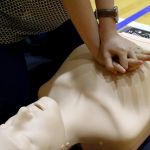
Learn Basic Life Support (BLS)
Join University of Southampton nursing students for an interactive session demonstrating basic life support (BLS) skills using professional training manikins. This hands‑on a ...Read More
Highfield Campus
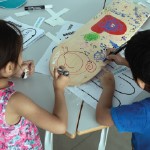
Shape the 'Scribble' Sculpture Trail with John Hansard Gallery
John Hansard Gallery and Skate Southampton invite you to explore the design of 'Scribble', a new interactive sculpture trail planned for Southampton in May 2026. 'Scribble' is a se ...Read More
Highfield Campus
